Surveillance

132_1309362
Surveillance cameras. Closed-circuit television (CCTV) cameras mounted on a pole. Photographed in Holborn, Central London, UK.

In this lecture we talked about visibility and visuality, what can be seen and how it is seen. We also talked about who is represented in our visual culture, who is seen, how they’re seen and who is excluded?

Photography was always used to document things. Lewis Hine, an American photographer proved that child labour exists when everyone denied it by taking pictures of the children who worked in factories. This is an early example of the well known thought: if you can see it, it’s real. It is more and more important for our visually hungry culture to register our existence. To prove our existence. To prove our importance.

Since technology is getting more accessible people are starting to use the camera and various softwares more and more. The more they do this the deeper the gap gets between the physical and the virtual self. The fact of being seen changes human behaviour, everybody acts differently in front of a camera, be it more extravagant or more shy.

When someone can control these tools, control the camera then they use it in any way they want: take shots from the best angles, showing only the most beautiful side of something. The person who has the camera, has power.

Panopticism

The idea of the panopticon was originally proposed by Jeremy Bentham in the 18th century. It was a circular building that had a tower in the middle. Around the tower there was open space and an outer wall. The goal of this structure and the design was to provide the most amount of security and surveillance. This is an architectural structure without guards or doors. You don’t need someone in the tower as long as people think there is someone there.

This is basically true in our modern society. Our public space is a panopticon, there is the obvious example of the countless CCTV around London, or the speed cameras monitoring our streets continuously. Apart from these examples there are the more subtle ones: we are happily sharing what we are doing, where we are doing it with large corporations. We record when and where we go for a run, we share and tag it on Instagram when we leave our home empty for the holidays.

Photographs:

CORDELIA MOLLOY/SCIENCE PHOTO LIBRARY / Universal Images Group
Perspective

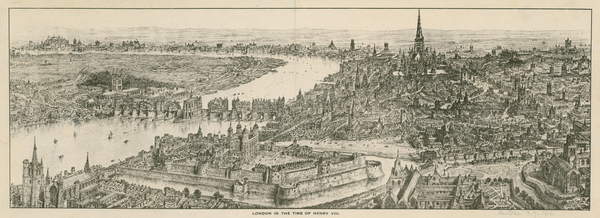
This lecture focused on cities, a place where people and design meet. We talked about the fact that it was always important for humans to know the landscape of where they live. This is easiest to achieve from a high point, but capturing some of the biggest cities like London as a whole was a real challenge.

610821
19th century view of London

From the late 1800s, when people started to develop airplanes and aircrafts there was a profound transformation how the general public perceived and imagined cities. Fast forward to our current generation and a ‘bird’s-eye’ view is completely taken for granted, it has fully integrated into our visual culture and defines our worldview. By using something like Google Earth, which is readily available for anyone, we can even have access to a very valuable political data that was not possible in the past.

It is interesting to see that drones, that anybody can purchase without a license, have a peculiar place in our contemporary culture: we all feel a bit concerned and worried about something that can float above us. The reason for this most likely dates back to the Second World War when bomber flights above the cities deepend our worries about anything that is above a city and can also represent power and control.

4066804
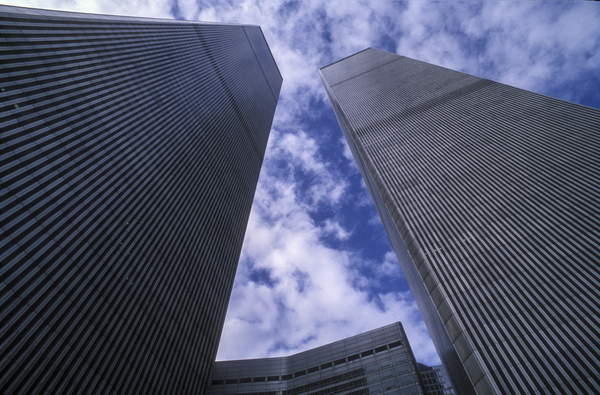
The twin towers of the world trade center

However cities not only expanded ‘horizontally’ but vertically as well which offers a new perspective. Starting off from these thoughts we talked about the movie High Wire in which a French high wire artist, Philippe Petit walked for 45 minutes, back and forth on a metal cable between the towers of the World Trade Center. We can look at this as a crazy and pointless act, but this public art in New York City represented rebellion, Petit refused to obey the rules and gave us a new perspective. Afterwards in an interview he said that life should be lived on the edge, and interesting thought opposing our desire to live a comfortable life.

Photographs:

View of London in the time of king Henry VIII (19th century) Bridgeman Images

The twin towers of the world trade center, (1989) Marcello Mencarini / Bridgeman Images

Lines in a visual culture

Screen Shot 2019-06-13 at 17.53.53 copy.png
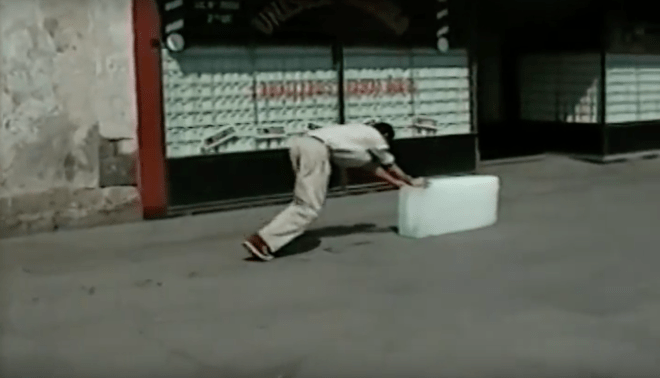
Francis Alÿs (1997) ‘sometimes making something leads to nothing’

As we watched the video of Francis Alÿs pushing a block of ice through the streets of Mexico City I could’t help myself to think about the things in my life that will disappear. Disappear the same way this mark behind the ice block itself disappeared in the heat of the sun in just seconds. This action of the artist took more than nine hours until the block has melted, all in the name of “sometimes making something leads to nothing”.

For someone who is living a very fast paced lifestyle, this nine hour act which was condensed into a 10 minute short video was painful to watch. I desperately tried to find the most rational reason for this action. Still can’t quite believe that I am saying this but I came to the conclusion that it all makes sense because it has been recorded. It made me question how much I am living in the virtual world or on social media or other online platforms. If something is not documented is it losing from its importance? Was it worth it if you can’t see the result? I can’t see it so its not there?

I would be very interested to know what Francis’ thoughts were during this performance, is the title “sometimes making something leads to nothing” was something that he decided before or after the experiment?

We all leave traces behind ourselves. Some of them are visible, some not, but it doesn’t make it less important if you can’t see the result and sometimes it is very important to let ourselves live without the pressure of visible achievements.

At the end of the session we were talking about how a line is just as important as the outer space that it leaves behind because everything is in relation to each other. So in my opinion nothing can lead to nothing if everything is connected.

cri_000000170331
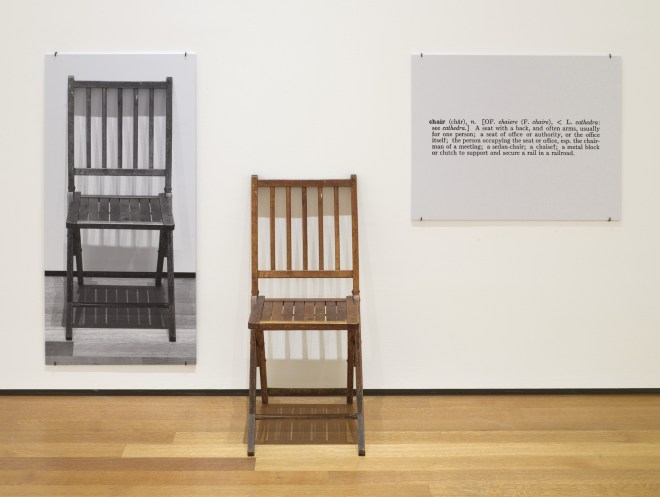
Joseph Kosuth. (1965). One and Three Chairs

In relation to lines we also talked about surfaces and traces. One of the examples we were shown was the work of Joseph Kosuth: ‘one and three chairs’. He represented a chair in three different ways next to each other: the actual chair, a size accurate photograph of the same object, and the definition for the word ‘chair’.

I think this installation of Kosuth is very provocative in a good sense. If I want to be honest it did not make me go wow in the first moment. But it provoked questions in me such as ‘what is art?’ ‘Is it really art?’ The more I was thinking about what Kosuth’s message is behind this work the more I started to appreciate it. I started exploring the relation between these forms of the chair. If I say chair, would it mean the same for everyone? How can I be sure that the chair on the photograph is exactly the one that is on display? Is it real if I can’t touch it? Is it real if it is only described verbally? Does it mean the same for everyone? My first impression turned into quite an admiration, the concept of looking at things using different platforms and exploring their meaning that way is very interesting. It made me realize that everything depends on your point of view.

Portaterms

In this session we were joined by an Academic Support Tutor, who ran a workshop called ‘Portaterms’ – Portable Terms. We explored terms that we are going to use regularly in our Contextual and Theoretical Studies. This session had two main parts. Firstly we were given definitions that we had to match with the correct words as a group work.

These words were: Feminism, Communism, Capitalism, Marxism, Imperialism, Structuralism, Post colonialism, Existentialism, Postmodernism, Culture, Dialectics, Egalitarian, Hegemony, Decolonisation, Left wing.

The second part of our session we were working in smaller groups and each group was responsible to create an illustration, a performance or an item that represented our given portaterm. Our group received the word ‘situationist’ and as this term was quite new for all of us we started this task with research. We found out that situationist artists were very involved in politics, rejected the consumer society and their artworks mainly consisted in maps. So we decided that we would like our design to reflect the existing situationist artworks. We created two posters, one of them was a newspaper which summarised the main idea behind this term. The other poster was inspired by the work of Guy Debord and Asger Jorn’s The Naked City (1957). We cut out different political news and consumerist images and used it in our own design in a form of a mind map.

Portaterms that other groups was given were: Reification, Autocrat, Anti-branding, Habitus, Appropriation, Situationist, Globalisation, Ocularcentrism, Modernism.

The rise of new communities in our brand culture

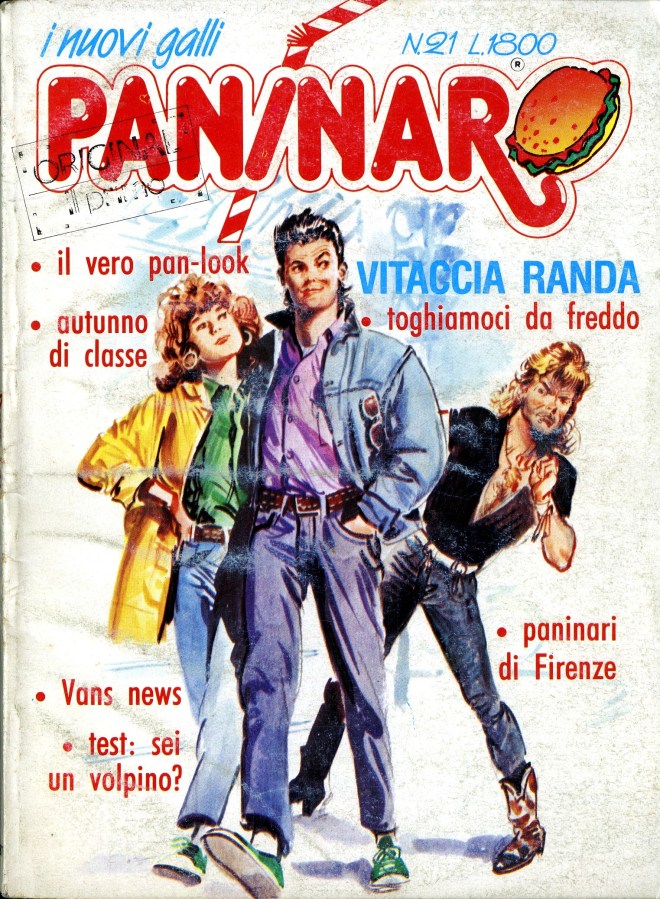
Rivista-Paninaro-n-21

What really makes me most excited about branding is the multilaterality of this topic. Brand is so much more than just a product that you can buy. Brands are relevant to businesses, services, it can be applied to ideas, places or even famous people. In our consumer society we are constantly facing decisions every single day when we buy one product over an other. These decision say something about us and makes us part of a community. What factors determine our choices when we shop is a very complex subject but as part of this consumer society it is key to understand what triggers the customer’s shopping habits so we can design successfully for today’s consumers.

In his book Michel Maffesoli explores how globalisation transformed the bases of our society. He believes that our traditional communities shifted to emotional communities and with the rise of individualism we are looking for groups where people share the same lifestyle choices. Mafessoli gave two examples to what he calls ‘Neo tribalism’: Punk community and Paninaro community. The last which was a Milanese youth group in the 80s in America. They believed in a consumerist and globalised American life style. This belief formed how they were dressed, what type of food they consumed and even their choice of vehicle.

Brand tribes play a very important role in our society. Firstly it gives opportunity to share experiences, beliefs with each other so it gives individuals the sense of belonging. It also has self constructive and functional benefits. It is very interesting to see that in the past, we had more traditional communities like our local communities, families etc. These days our consumer society created these new types of communities where in order to belong somewhere you need to buy certain things. So what basically was free in the past (the feeling of belonging) has a price tag now. You used to born into communities but now you just buy yourself into one. Despite the negative side of these changes consumption plays a powerful tool providing a new way of creating personal, social and political identities.

One of my favourite example for brand tribes was Tupperware. A very interesting way how a plastic container company created community with their concept of ‘Tupperware parties’ that made a mark on the 50s in America. Unfortunately in our profit oriented society manipulation of the brand’s image sometimes becomes more important than what the brand really represents. The question is how strongly connected these people are if the only thing they have in common is that they believe in the same bullshit that a company feeds them.

We finished our session with an interesting workshop. We were given an item, mine was the iconic Christian Louboutin black heels with red sole. We had to write a description of the person who might own that item and to further visualise this person we had to draw a picture of this member of the Louboutin tribe.

tupperware

Information as a powerful tool

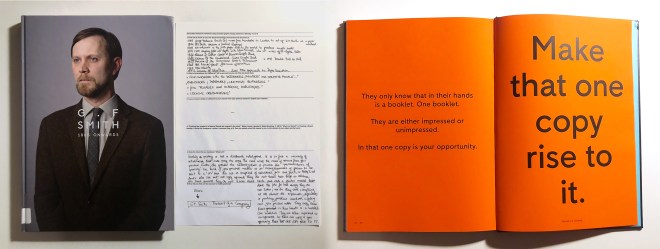
GFSmiths
My filled in secondary research sheet, using the book called ‘Portrait of a Company’

This workshop was thought by our course librarian Monica Sajeva who gave ‘No Google’ as a title for her lecture. Her aim was to widen our knowledge about how we can access different sources for our future projects. She introduced us to different kind of websites and databases by giving us a group task. For the following task we were not allowed to use Google, only the deep web. She said that Google is really just the tip of the iceberg when it comes to searching online and there are so much more information on the internet than what is accessible through Google. This session opened my eyes to how privileged I am to be able to reach information so easily and how much I am not making the most out of this opportunity by using Google only when I am doing my research.

While researching online I found a very interesting article which stated that in the US Google owns almost 80% of the all the search advertising. The last time a company had such a high percentage of the market was in the 19th century, before the anti trust laws came into effect to regulate large corporations and prevent monopolies.

To further take this knowledge into practise we had to repeat last week’s research task, but this time for our secondary research we were not allowed to use Google. Because this time I was not relying fully on Google it opened a completely new door  for me where I was actually able to really dig deep into last week’s subject. I found a very helpful book in the library titled ‘Portrait of a Company’ (G.F Smith). Holding this book showed me more of a real feel of the company and therefore gave a much deeper understanding of my subject.

‘A brand is a story.’ – Hieat D.

ResearchAndCreativeStorytelling
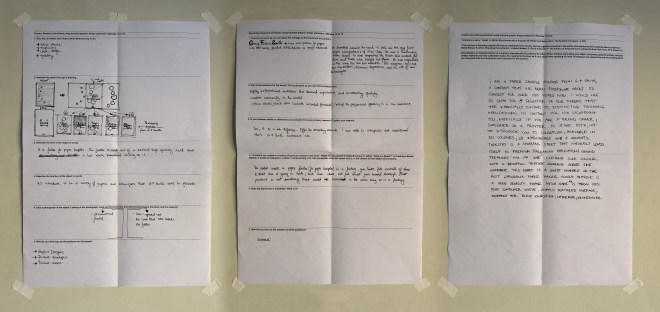
Project research and brand voice tutorial sheets

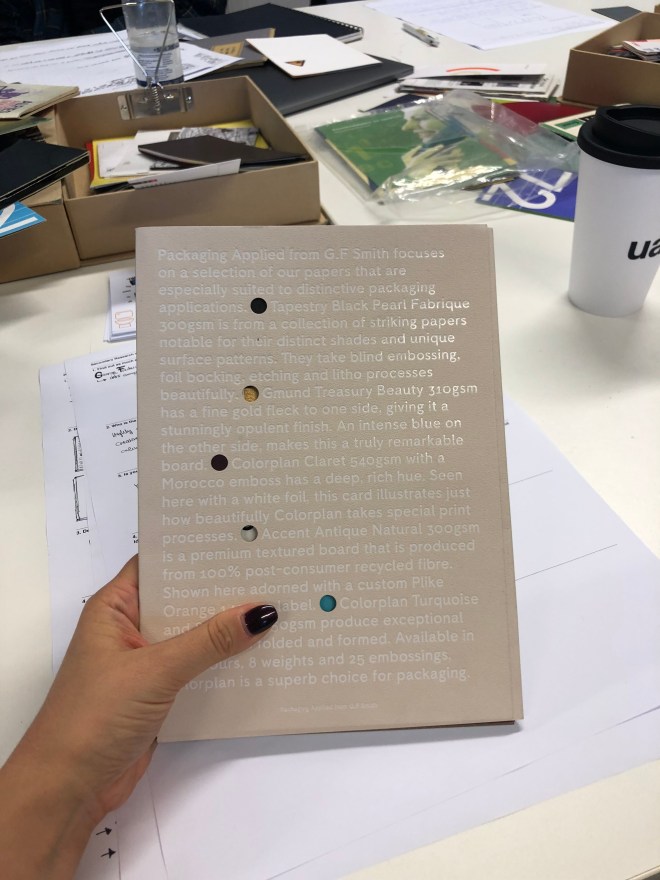
When our tutor Andrew placed a box full of promotional materials on the table I was very excited. It was his own collection that he started in 1990. Surprisingly it did not take me long to find something that I fell in love with. It was a cream folder. Very delicate with paper samples inside from G. F. Smith. You could tell just from the look of it that this folder is made for very high standards. Using the product we chose we had to go through some questions which helped us to understand what are the steps of a well developed research.

Firstly in our primary research we used our own knowledge and just by looking at the item we tried to understand as much as we can about the company that released that item. We had to familiarise ourselves with the product as much as we could, describe the object through drawing and words, guess who is it aimed for etc.

With the secondary research we were able to answer to the questions in more detail. We were asked to find out about the company’s heritage and compare our answers to the sheet on the primary research. The third sheet that we received helped us to understand the term ‘brand voice’  through writing a creative story about the object and brand.  We had to think about our product as a person who can speak. And if the G. F. Smith folder could speak, what would it say? What tone of voice would it use to say it? To whom would it say? These are just some of the questions that we had consider.

It was very interesting to see how a good research determinate how much we could step into a brand shoes, speak in their language, tell their story.

IMG_3640
G. F. Smith paper sample folder


BRANDING } in five and a half steps


Branding5.jpg
Muscle reading – group exercise

In our session, we were introduced to ‘muscle reading’ which is a system that involves nine stages in three phases. The phases are:

  • Prying out questions.
  • Rooting up answers.
  • Reviewing and Reviewing.

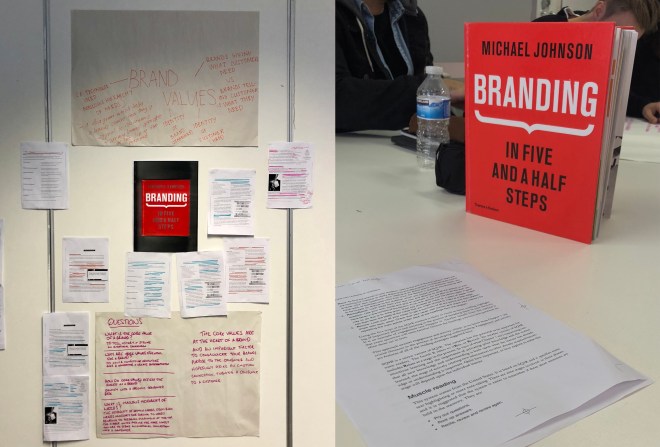
After we had this knowledge we had to try out this technique by reading a section of the book Branding in five and a half steps by Michael Johnson with our group.

There was a pyramid diagram in the book by Abraham Maslow called ‘hierarchy of needs’. The core point of this diagram was to show the difference in how you can you build a brand around people’s needs. It claimed that brands that are focused on basic human needs of existing could be successful but if you try to go higher up on the pyramid the more likely you are to strike an emotional connection with people.

The author of the book also believed that having a central idea, a core purpose of a brand is critical. If you can clearly define why you are here, then that makes it a lot easier for your audience to understand what you stand for, therefore your brand will be more successful. He also talks about how much difference it makes if a brand chooses their brand values and beliefs carefully. He said it could be critical in identifying any organisation. But unfortunately nowadays many companies appear to have the same ones and it became a little bit uniform.

First session at LCC

The day started with basic information about how our week is going to be structured and what type of equipment we need to bring to our sessions..

We were introduced to some of our teachers as well as the ORB, Lynda, Moodle. We received information about where we can find solutions for different problems that we might have. Following that we were separated into groups where we gathered our thoughts around studentship and tutorship. It was a great starting point to draw our attention to the fact that all the responsibilities such as: punctuality, attendance, managing our time, taking notes, be open minded, focused. All of these are connected to each other.

The next part of the session we were separated into two groups and played a memory game where everyone told their names and their favourite brands. We went around and everyone had to tell the name and brand name of the person on their left. Although i can not remember everybody’s name or which brand they chose it was interesting to see that most of the brands were originated from the US. It made me think whether I am conscious enough about my choices as a consumer.