Some of us would give anything to know what will happen in the future. Others are more afraid to even think about it. I was very excited on my way to the V&A’s exhibition to find out how the exhibition explores what is shaping the world of tomorrow.
‘Every new invention, technology or design idea of the present shapes our future’. This was the main idea that formed the whole exhibition. They displayed more than 100 contemporary products or projects, all of them showing how the future might look. The objects are either newly released or in development, but all real. Displayed across four zones – self, public, planet and afterlife – they do not determine our future, but suggest a certain future.
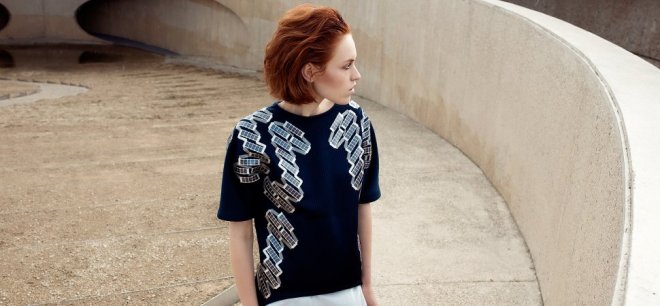
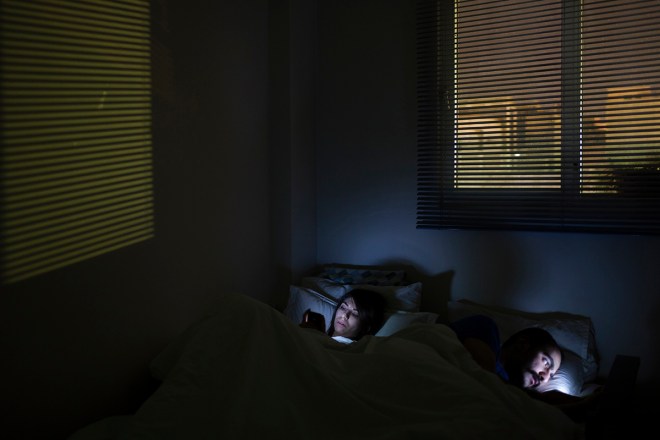
Among many items, they displayed a solar shirt, ‘a shirt that powers your day’ which can generate enough electricity in one hour to charge a smartphone. ‘A smartphone that never leaves our side’. Which became an extension of our body. Which we use to browse, navigate, listen to music, order food. Which can easily connect us to our friends and family regardless of the distance. Why do we feel lonely then? I found the photographs by Hanif Shoaei very disturbing as it was just so relevant and real.
The furry robotic seal that NHS use with dementia patients to comfort and care was probably one of the most surreal item I have ever seen. It really made me think about how we are living in a disconnected society. How we have shifted our priorities and putting ‘ME’ in the first place. We expect more and more from our machines to make our lives easier. Are these machines really making our lives easier? Or will we forget how to care for each other? With these questions in my mind I entered to a mini version of ‘the restaurant for one’ called Eenmaal designed by Marina van Goor. The restaurant only features tables for one. It is designed to break the social standard to eat with someone in public.
In a digital age, online platforms give individuals the opportunity to organise, join and create new communities. The exhibition questions whether the future will be defined by top-down governmental systems, or if it will be shaped by citizen-led organisations. We all want to be independent. We all want to be in control. But are we really in control? Cambridge Analytica (CA) uses data analysis to monitor and influence political elections. CA played a huge role in the US presidential race, helping Donald Trump’s victory. Uber drivers are ‘independent contractors’, but the company uses an algorithm to connect certain drivers with passengers, which removes all sense of independence. Everybody wants to be their own boss. But what if your boss is an algorithm?
Unfortunately our digital traces are also often misused by massive online corporations, like Google, Apple, Microsoft, Facebook. The size of the Sainsbury Gallery made it possible to hang an object like Facebook’s Aquila drone, which is currently in development to enhance internet connectivity in places around the world where internet connection is still not provided. High above everything, this 40-metre width drone looked very scary actually. A giant bird that is harvesting personal information. Are we going to live in the shadow of these giant corporations in the future I wonder?
So what will the future look like? Curators gave visitors the opportunity to come to our own conclusions with an interactive game at the end. As I left the building I tried to remember myself of the note which was written on the wall at the beginning. ‘The future we get is up to us, because the future starts here.’
Photographs:
Shoaei, H. (2014) Technology in Bed
Fleur, L. (2015) Solar Shirt by Pauline van Dongen

