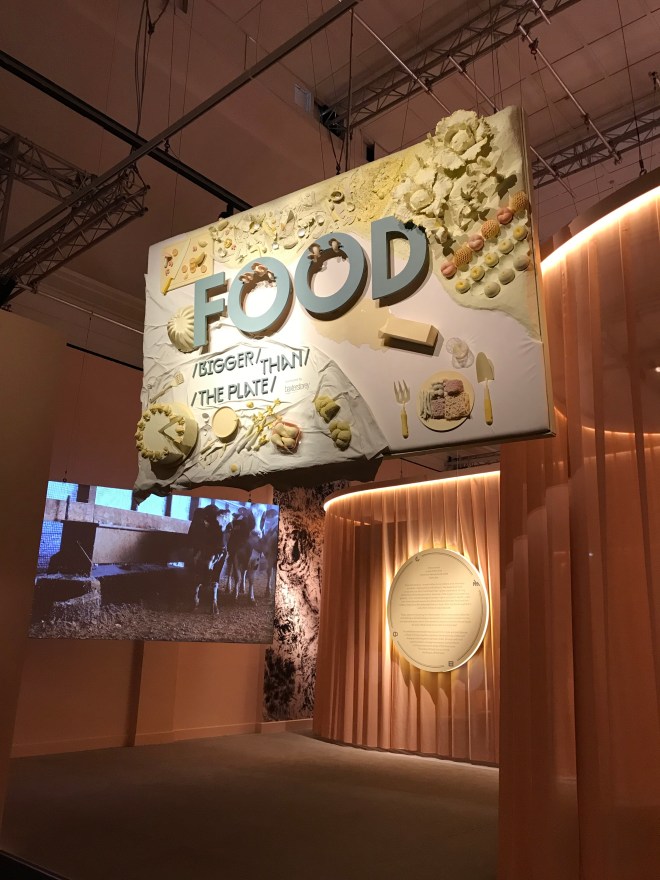
Food – it relates to everyone, yet the largest global issues that need solving today – from the changing climate to the right of workers and public health services – can all be traced back to what we eat and how we eat. In this situation the currently existing food system which mostly took shape in the industrial revolution needs to be reconsidered. As the distance between the source of our food and our plates grow we all feel disconnected from what we eat. Often we don’t know where it comes from and how it was made.
The exhibition at the V&A ‘FOOD: Bigger than the plate’ shows the reality of our food production, explores questions and possibilities for a better food future. They displayed designers’ and artists’ works through four areas, starting with composting, then farming, trading and eating.
The exhibition had a very strong start, exploring our relationship with waste, what is disposable and what could be reused. An unexpected aspect of this was human waste. In past centuries it has returned to the earth, but now it’s getting flushed down the toilet along with some drinking water to a landfill or the ocean. This is ruining the nutrient cycle.
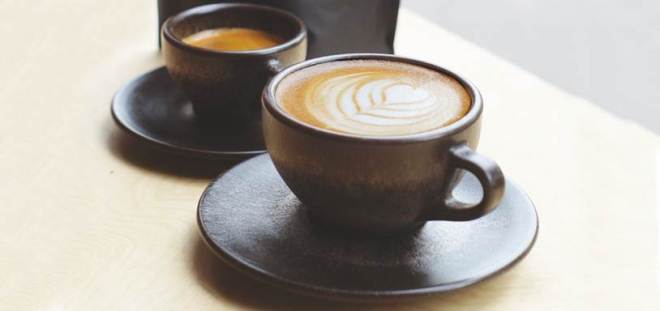
One of my favorite items displayed was the Kaffeeform cup, designed by Julian Lecher. These coffee cups are made out of used coffee grounds, gathered from cafes around Berlin, closing the ‘loop of the cycle.’ I really loved the idea that we can make waste presented in a beautiful and practical way in day to day life instead of just throwing it away.
With the industrial revolution, farming methods and people’s diet has changed. Most people are detached from how food gets to the supermarkets, how animals and other species are involved and how we depend on them to survive.
To boost our food production humans always tried to redesign plants and animals to suit their needs with techniques like selective breeding which was essentially a pioneering method similar to modern genetic engineering. However now meat is mass produced and has become cheap and a central part of this new industrialized system.
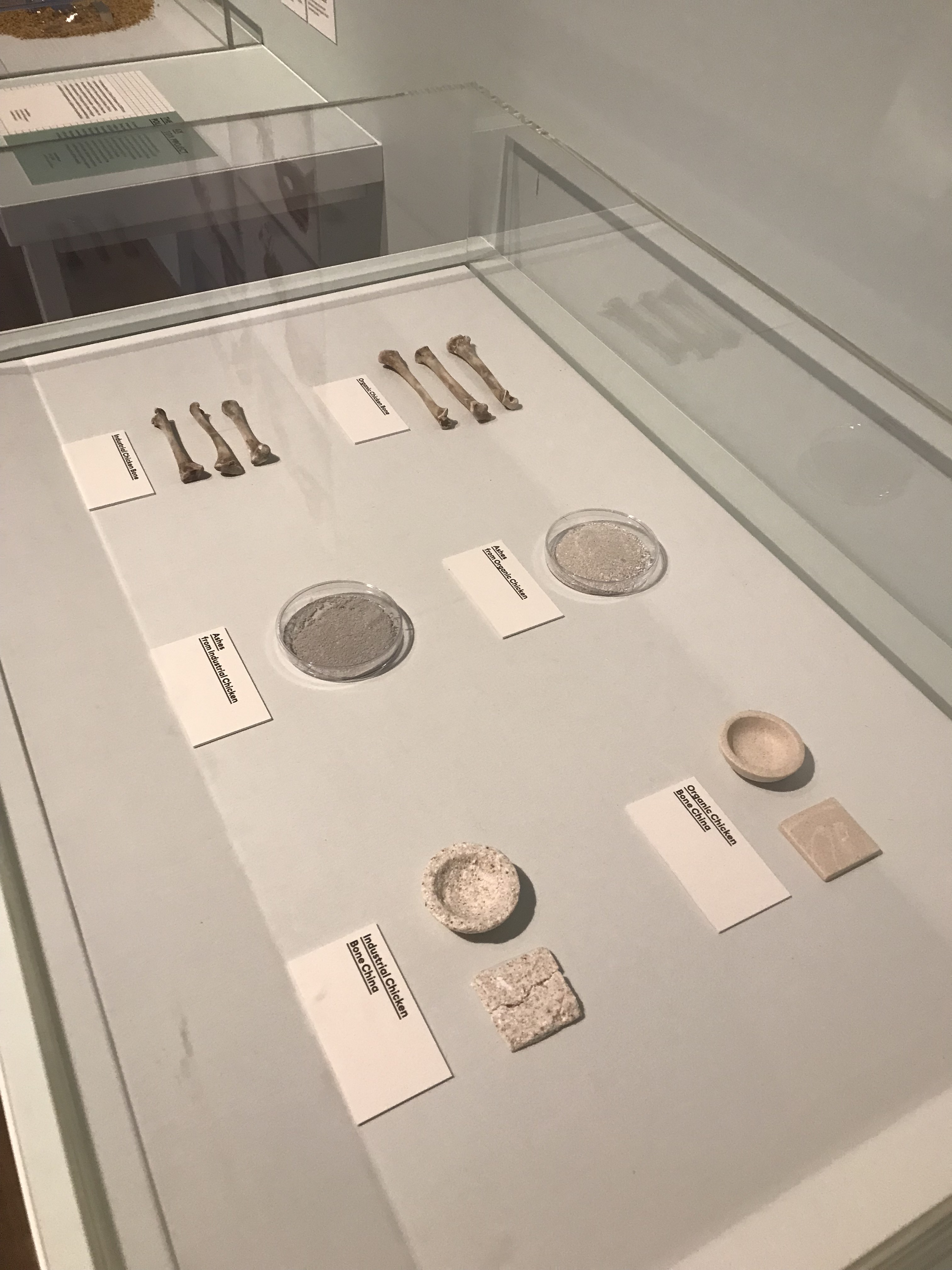
After I watched a 13 minute clip from the documentary ‘Our daily bread’ that presented our European high-tech food production. I entered the next room where they displayed Nienke Hoogvliet’s work. She worked with scientists to make porcelain from the bones of factory farmed chickens and organically raised chicken, the difference between the two was obvious.
The food we consumed used to be from local farms, livestock and plants and we ate different food in different seasons. Industrial production may have lowered the price of food in our supermarkets’ shelves but the true cost of this has only been shifted behind our back. The way in which we relate to what we eat is more visual, focusing on brands and not on the act of eating itself.
The last part of the exhibition, eating, presented bold new ideas around cooking and eating, it experimented with rules and traditions to prepare us for what we might have on our plates in the future.
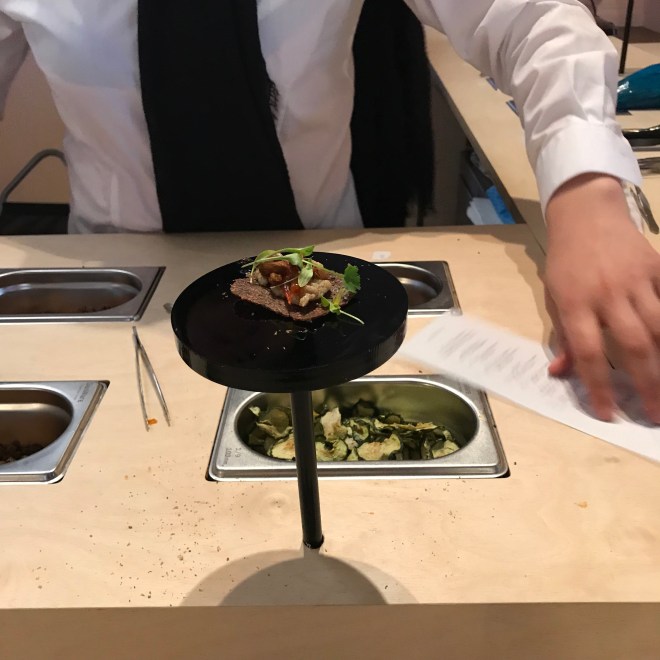
At the end of the exhibition we were asked by LOCI Food Lab if we could design a better food culture, what would our top priorities be? We were given 16 choices (such as from zero waste, biodiversity, affordability to transparency, etc.) and were allowed to choose three. Then based on our choices we were given a chance to taste our own food and were served a personalized snack, drawn from a selection of ingredients from the english lowlands beech forest bioregion (in which the V&A is located).
It was a great finish to this exhibition. Although at some point during the exhibition I felt that there is no way back, we messed it up too much, I left with a feeling of hope and motivation. Better food future is different for everyone. Our priorities are different. What is sure that over the last 150 years our society has made lots of mistakes and we have to start having a new discussion when we look to the future.
For the few big corporations controlling the food industry the most important thing is profit. In pursuit of this they are willing to neglect nutrition, taste, fairness and diversity. But thankfully the number of people who don’t agree with this is growing and they are constantly challenging our reality. They try to make the process of how food is delivered to our plate more visible, while also trying to make trade and distribution better. The value of food is being refocused from profit to benefiting everybody from those who produce it to the people who eat it and ultimately: the planet.
 Home
Home 